Every Day Trail Running Gear
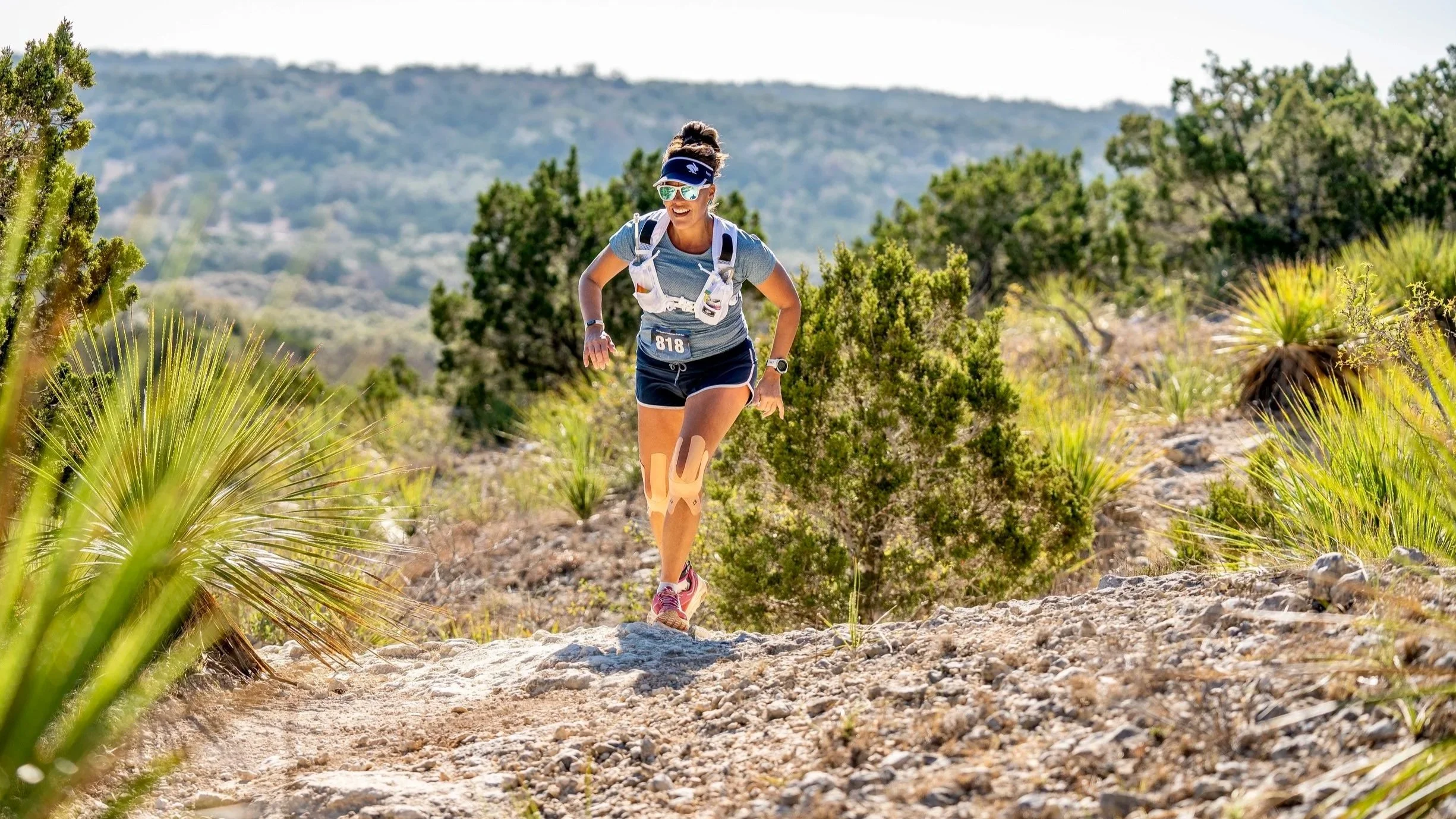
The key to a good trail race is to only use tried and true gear that you have tested during all your training trail runs!
I LOVE to trail run. It is one of my “every day” favorite adventurous things to do. While I also thoroughly enjoy hiking, I love trail running more. Chalk it up to the fact that I get bored easily, but in my opinion, going faster on the trail is more fun.
During the week, I tend to keep my trail runs between 3-6 miles and then on the weekend I’ll go for the longer runs. Longer trail runs are usually between 7-15 miles. That can vary a lot if I’m training for a long trail race, but these distances are what I am currently running.
So, for these trail runs, here is the gear I carry on the daily. Since trail running clothes is a whole other long list, we will keep this list to gear.
1. GPS Watch
Do you need a GPS watch to go trail running? Nope. And don’t let anyone tell you that you need one. But for us gear junkies, trail racer wannabes, and data nerds…we love a good GPS watch.
Why a GPS watch? Because even the most basic GPS watch gives you important information like distance traveled, elevation gain, descent, average pace, heart rate, and of course, the time. And if you have one of the fancy GPS watches you can also access or download additional information like route maps, workouts, current weather, music, and so much more.
As for brands, you have a lot of options, but I would stick with what I refer to as the Big 3 of GPS watches – Garmin, Suunto, or Coros. There are other brands, but if you’re looking for a GPS watch to support your trail runs for the next few years, I would definitely go with one of those three brands.
I’m a Garmin girlie, so my first recommendation is always going to be a Garmin. (Full disclosure, I’m also a League of Garmin Captain so I do get some Garmin product for my run club.)
But lest you think Garmin bought my love, know that I’ve been wearing a Garmin watch since 2016 when I got my first Forerunner. I started with their most basic of running watches, the Forerunner 35, switched to the Instinct in 2020, and now I wear the Garmin Fenix 8. I have loved all my Garmin watches, but the Fenix is definitely the best one I have owned.
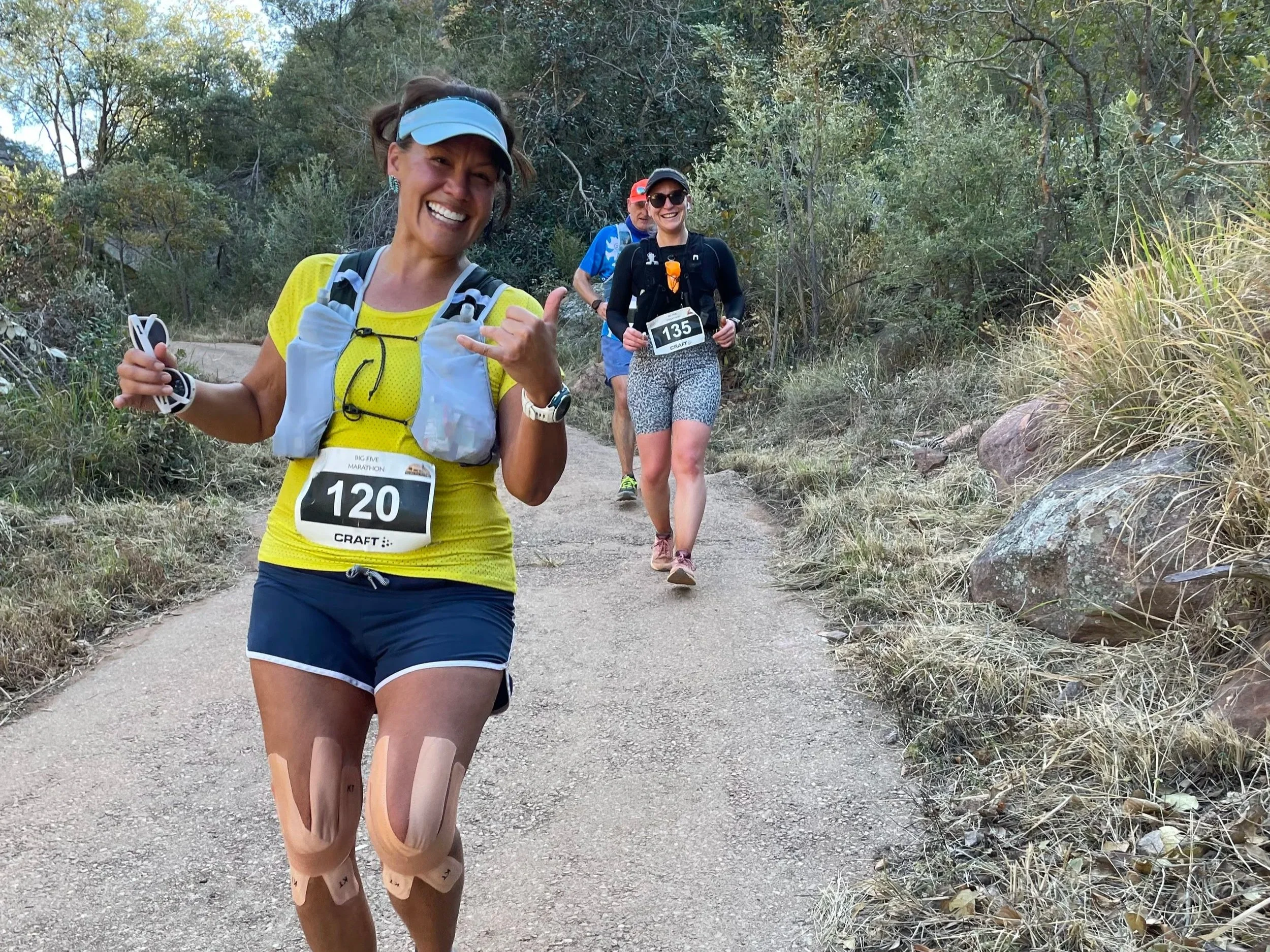
My Instinct may have not been my first Garmin love like the Forerunner 35 or my great love, like my current Fenix, but oh the places this Instinct watch took me. We surfed waves in Hawai’i and ran the Big Five Marathon in South Africa (pictured here) together. Only good memories, Instinct!
While I love my Garmin, I know it isn’t the end-all-be-all of GPS watches. Earlier this year, I was gifted a Suunto Run GPS watch which I liked a lot. Since I have owned Suunto’s freediving watch, the D4 for several years I already was familiar with the brand’s high quality.
But back to their trail running watches…it’s worth mentioning that the Suunto phone app was also very intuitive and I think it is better than the Garmin Connect app due to ease of use. The only reason I’m still not running with my Suunto was because the watch I received was a Suunto “Run” which is their most basic watch that doesn’t have any trail map options.
You’ll remember that I also recommended Coros watches. I have friends that use Coros and really like them, but I have never tried one. So, while I consider them one of the Big 3 of of GPS running watches I don’t have any first-hand experience with them.
The cost?
The price tag is one of the biggest reasons I don’t ever tell people they need a GPS watch to start trail running. Heck, I know really good trail runners that have been running for years, do the big ultra races, and they still don’t wear a GPS watch.
Back to the cost…while my first Forerunner was on the more affordable side being $169 on sale in 2016, my Fenix 8 cost about $1,099 not on sale a few months ago (that’s not even the most expensive one either). And within two months of buying my Fenix 8, they came out with the Fenix 9!

Can you spy my OG Garmin, the Forerunner 35, here? Also, those were my favorite trail shorts until I wore them out. RIP old favs!
But I wore my last Garmin for five years (and I still have it and use it as a backup watch) before upgrading to this Fenix 8, so I anticipate having this watch for another five years. Break that $1k+ down over 5 years and the price becomes more palatable.
If the Garmin price tag is already getting you down, the good news is that Garmin is the most expensive of the GPS watches. The Suunto lineup starts at $199 since the brand is still selling its original “Run.” But you can now upgrade to the Run 2 for $349 for 4 gb of storage or spend $399 for 64 gb.
For longer battery life and better trail running maps, you’ll probably want the Suunto Race 2 for $499 or you can opt for their most expensive model, the Suunto Vertical 2 that is $599 for the stainless steel or $699 for the titanium models.
What’s interesting about the $599 Suunto Vertical 2 is that is comparable to $1,099 Garmin Fenix 9.
And what about our friend, Coros? While I have respect for the brand, as I mentioned before, I don’t have any firsthand experience with their watches. But I do know that their comparable product to the Garmin Fenix is the Coros Vertix 2S and it goes for $699.
So, if you’re just getting into trail running and don’t have a loyalty to a GPS watch brand yet, you now have the price tag info to inform the battle of the brands.
Whew, that was way more chit-chat about GPS watches than I intended, so let’s speed this list up.
2. Road iD
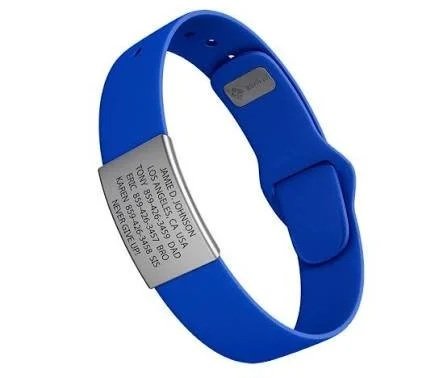
Used a stock photo so you could see the Road iD closely.
This is probably an unusual item for most folks’ trail running must-haves, but I wear a Road iD every single day .
Road iD does explain it best so I’m going to quote them to describe the product. “Road iD is a wearable identification tag or bracelet that displays your emergency contacts and critical medical information if you are hurt or unable to speak.”
I wear the silicone bracelet one, and have many different color bands that I trade out for the holidays or to match my outfit.
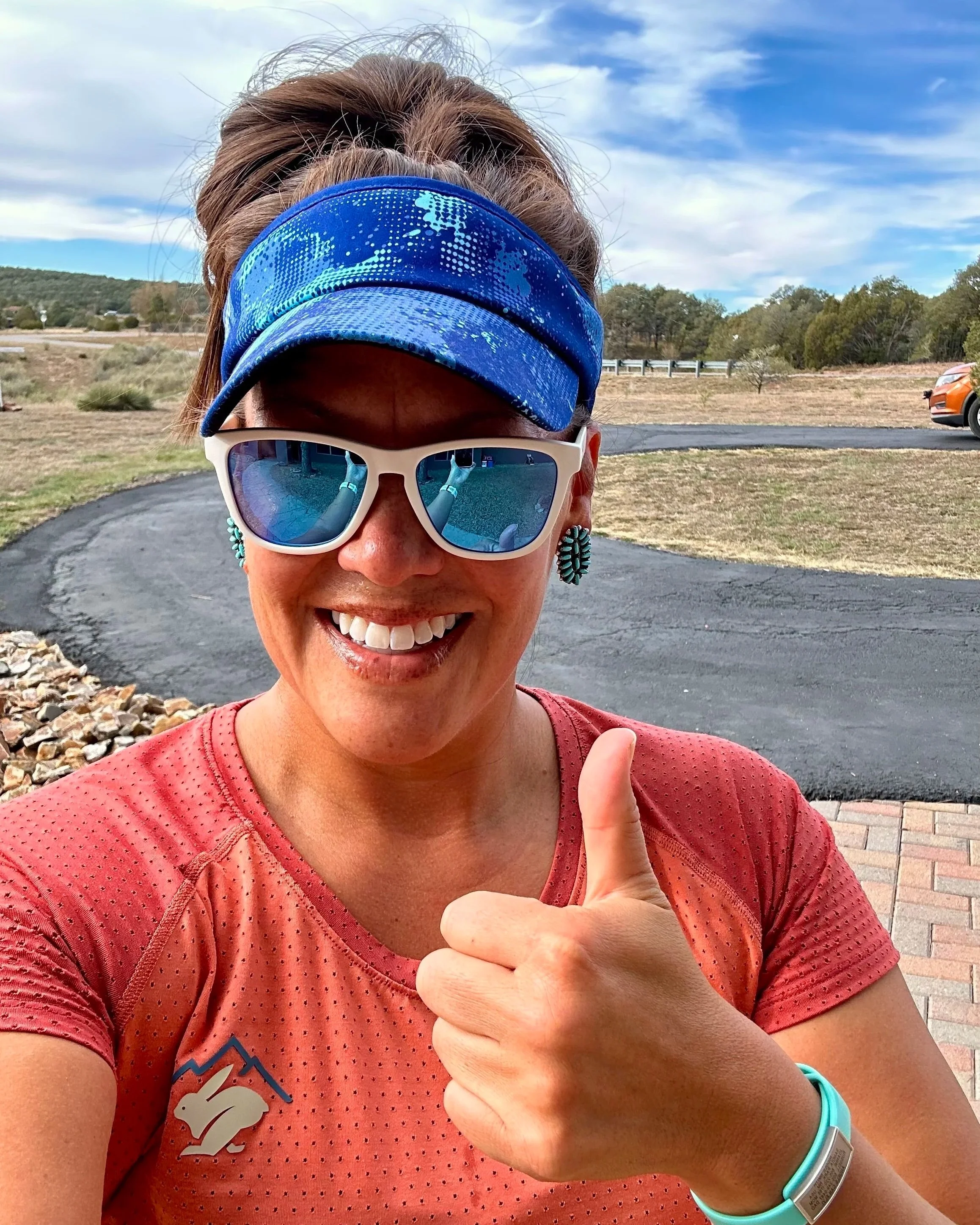
It’s a selfie, but this is the best up close photo that I have of my Road iD in action (that doesn’t also give you all my info).
This product falls squarely in the safety’peace of mind category, but as someone who has gotten a concussion from falling while hiking before (and almost passed out), the Road iD is something that I will always wear on the trail.
3. Hydration Pack (aka running pack or running vest)
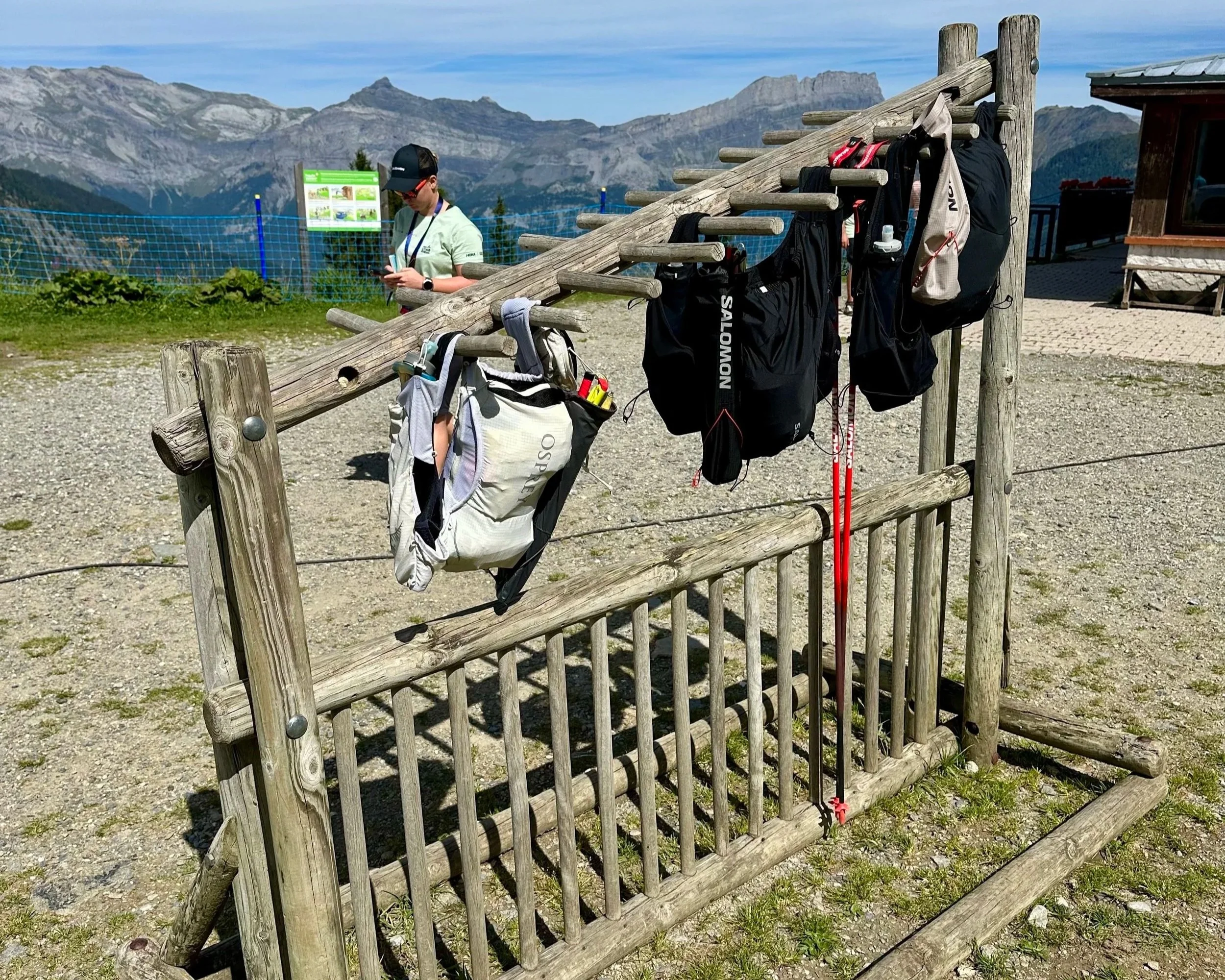
On the TMB in France, my running group used this ski pole rack as a pack drying rack when we stopped at a refugio for a snack.
Ah yes, the very item that road runners love to hate. If you’ve been active on social media this year, you’ve seen the snide comments and jokes that the roadies have made about our hydration packs.
But you’ll find none of that hydration pack hate here. Because I have a deep love and respect for the hydration pack. I purchased my first hydration pack – it was a bright pink Nathan Vaporairess (I still have it) - in 2016 while training for my first trail race and I have not looked back since.
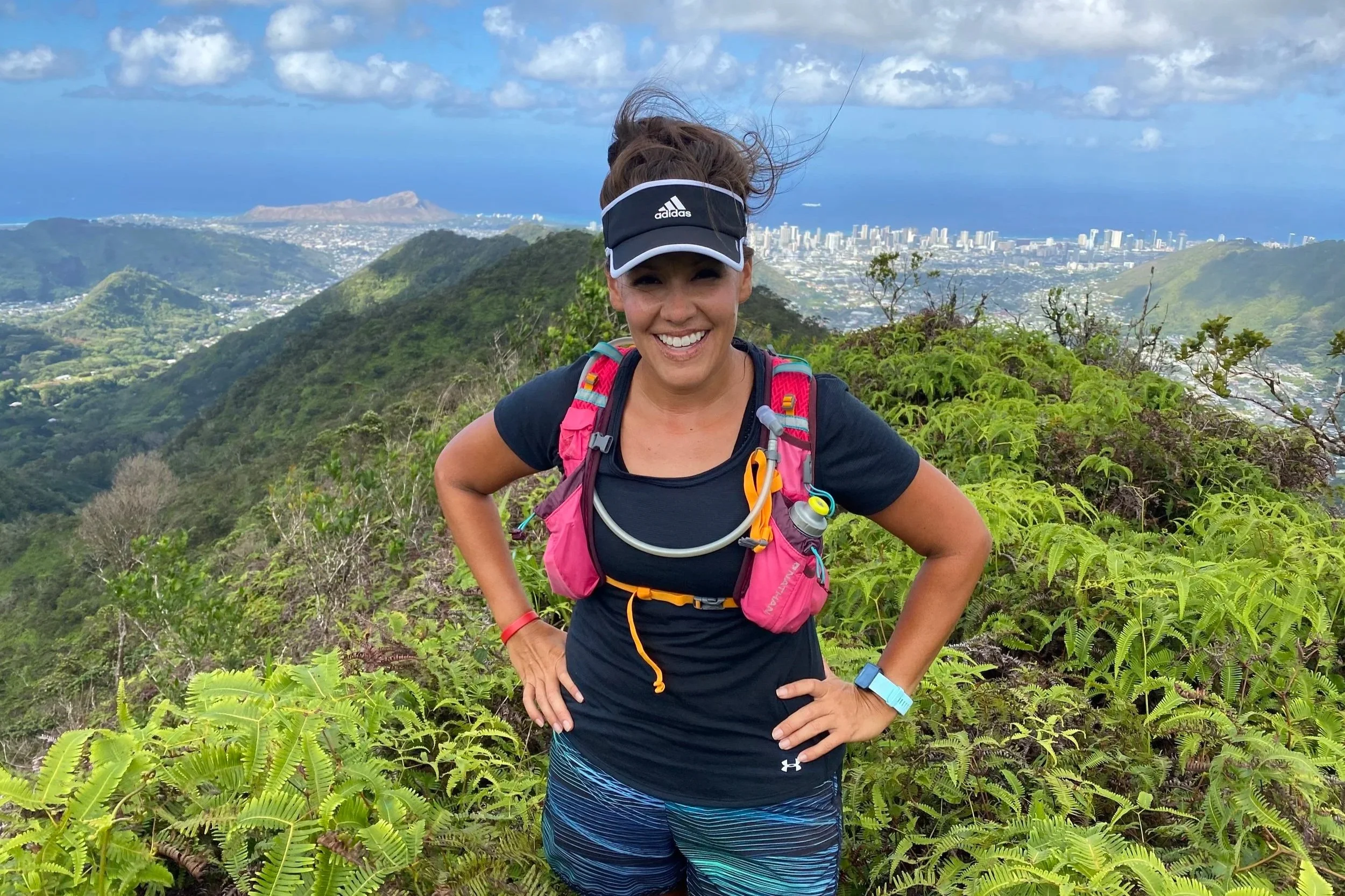
Here is my beloved Nathan Vaporairess hydration pack still going strong in 2020 during the pandemic when the only fun thing available to do in Hawai’i was get out on the trails. Even the beaches for were closed for awhile during the pandemic. Crazy times!
Hydration packs are just so practical and helpful. Okay, I will admit, I am a gear junkie who just downsized from 8 packs to only 5 packs. But I use all of them. Each has a different gear storage capacity, water carrying capacity, and serves a different purpose. They all get used until they fall a part or if I upgrade I pass along the ones in good shape to other runners at my run club’s gear annual gear swap.
What can you hold in a hydration pack? Oh my dear, sweet unknowing friend! Let me enlighten you and welcome you into the hydration pack fold.
Since I trail run in the mountains usually at 7,000 ft and higher, every time I hit the trail at minimum I carry 500 ml water, my phone, chapstick, SaltStick caps, 1-2 items of nutrition (gels or bars usually), a pStyle (more on that later), a small knife, and a thin windbreaker.
If I run after 2 pm, I throw a headlamp in the bag just in case. In the winter, I carry more gear. If I’m going on an all-day adventure, I carry more water, 500 ml of Naak, and more nutrition. If I’m going up and down steep mountainous trails, I’ll bring my trekking poles.
All of this gear requires something to hold it in, and my 10 liter Osprey Dyna Pro pack is what I have been rocking all summer for runs and races.
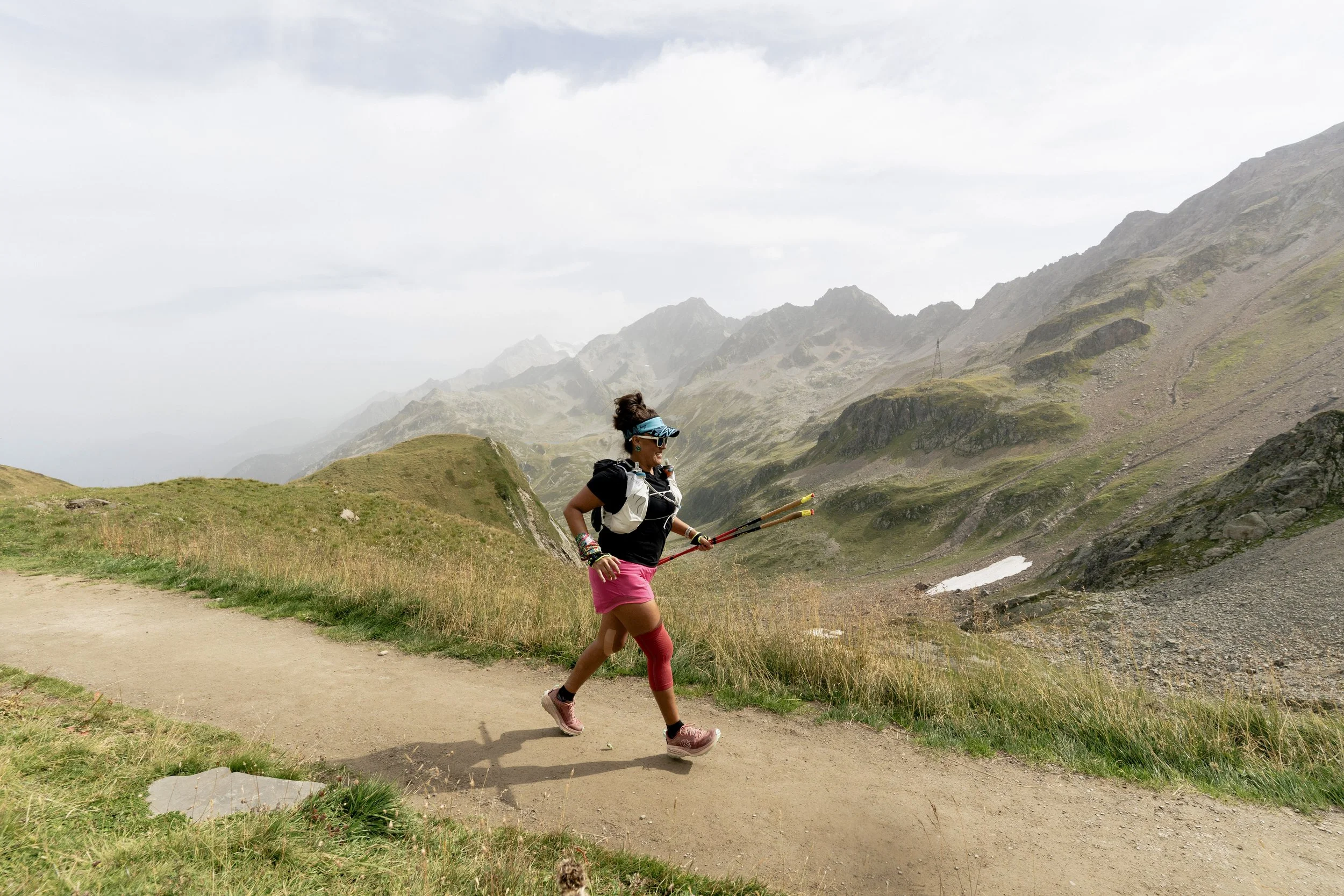
The Osprey Dyna worked beautifully to run in the Alps this summer.
For shorter training runs or road runs, I’ll wear my Orange Mud Endurance Vest since it sits higher on my back.
For an all-day trip requiring additional food or a run carrying winter gear, I’ll grab my 12 liter Instinct Eklipse pack. I can carry 2 600 ml soft flasks up front and a 2 liter bladder in the back of the Instinct pack, so it’s a good option for trails that have no water refill locations.
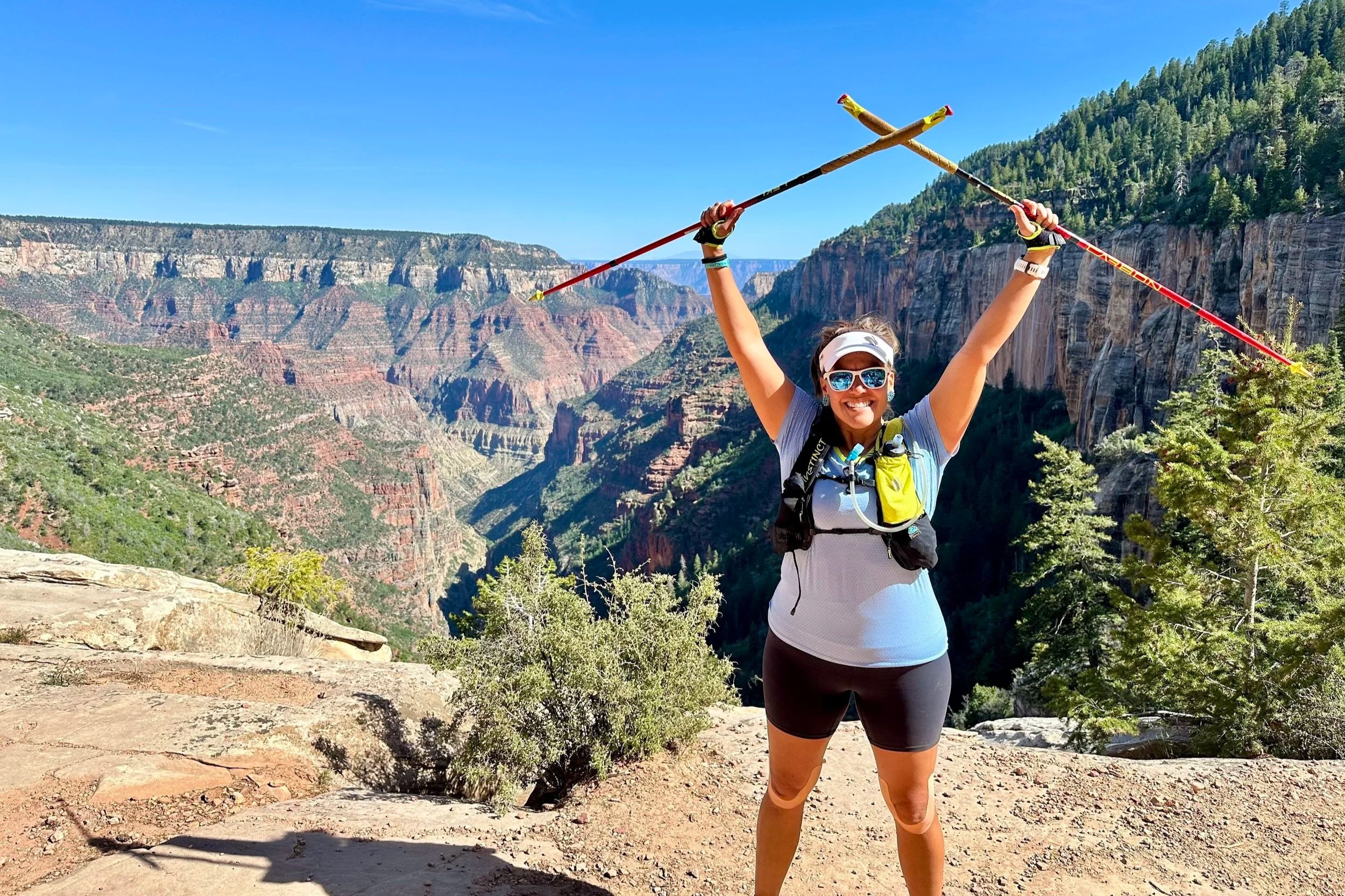
For my 22 mile Grand Canyon Rim-to-Rim last May, I used the 12 liter Instinct Eklipse pack so I could fit all the gear and nutrition that I needed for the day.
In short, bring on the people who make fun of my hydration packs. I’ll probably be saving them with the extra trail snacks and water I always carry in my pack at some point soon.
4. Trail running poles
Poles have not always been my friend, but after using them every day this summer on my Europe trip while trail running the Tour du Mont Blanc – 106 miles of trails through France, Italy, and Switzerland – they have moved into the must-have column.
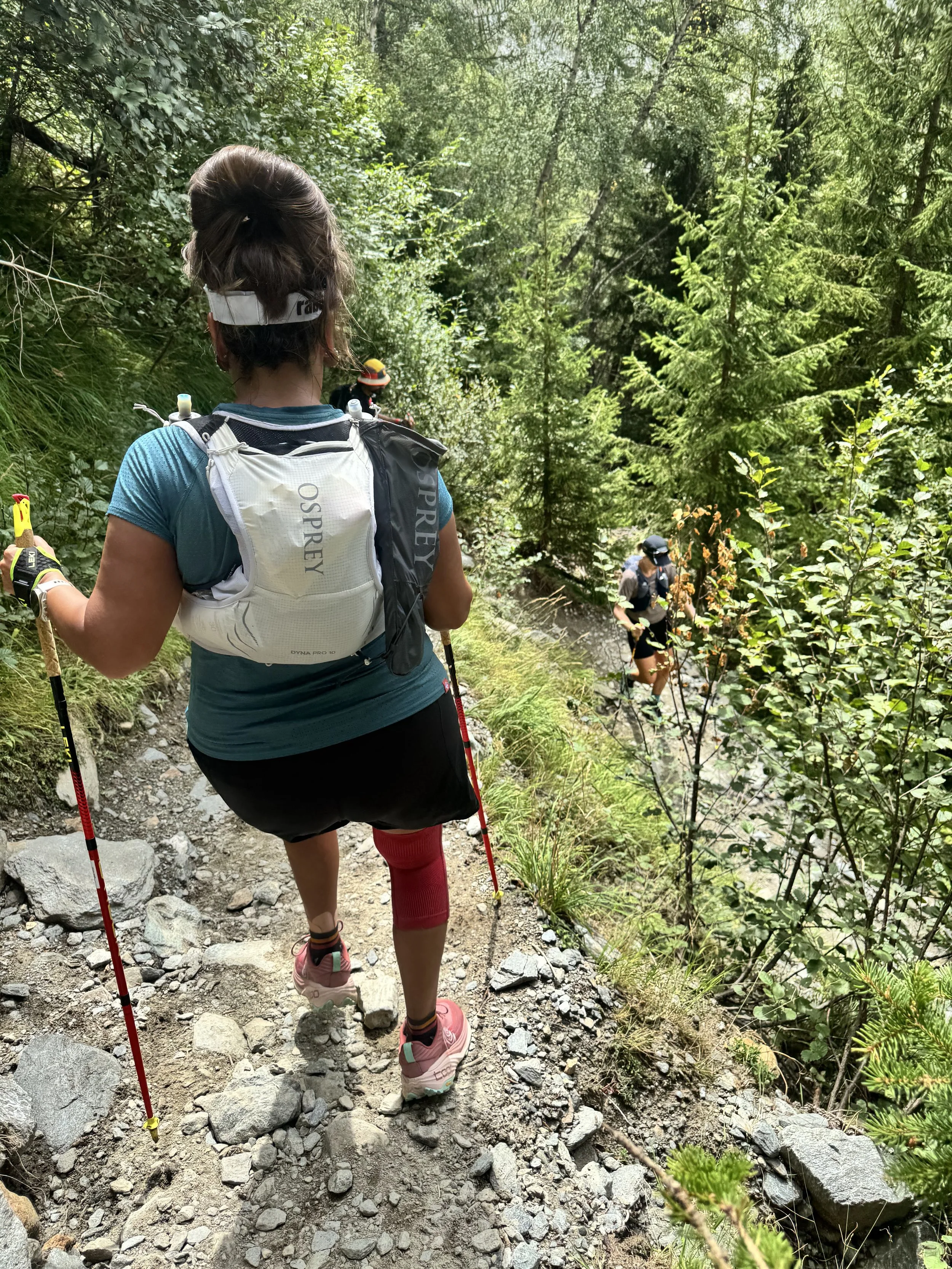
Used those poles every day in the Alps this summer! And I promise that hill is much steeper than it appears in the photo.
For my new trail runners though…do you need them? No. I didn’t use poles until 3 years ago, and I did not even really like them until this summer. I thought poles were only helpful for steep uphill sections of the trail, but after experiencing the very steep, technical downhills in the Alps, trekking poles saved my knees from what probably would have been a certain knee blowout on day 3 of the trip.
For trail running, you’re gonna want to spend money and buy the carbon, Z-poles. I know, my frugal friend, the price tag of the carbon poles ($200+) stings your thrifty saver soul! But while you can totally get by with the cheaper, aluminum poles for hiking, you’re going to need the much lighter, carbon poles that fold down into 3 pieces so you can easily slide them into on or into your pack.
I use these Leki carbon poles due to their clip-in grip, but Black Diamond and other brands make great options so it’s worth doing some research before you buy.
5. pStyle
Up til now, I don’t think you’re surprised by anything on this list. But let’s change that because if you haven’t heard of the pStyle you’re either going to love the idea or be mildly weirded out by it (at least my sister is).
The pStyle is a personal urination device that is better described as a stand-to-pee device that allows you to stay fully clothed while peeing. Watch this video to get a demonstration. Don’t worry, the video is tasteful.
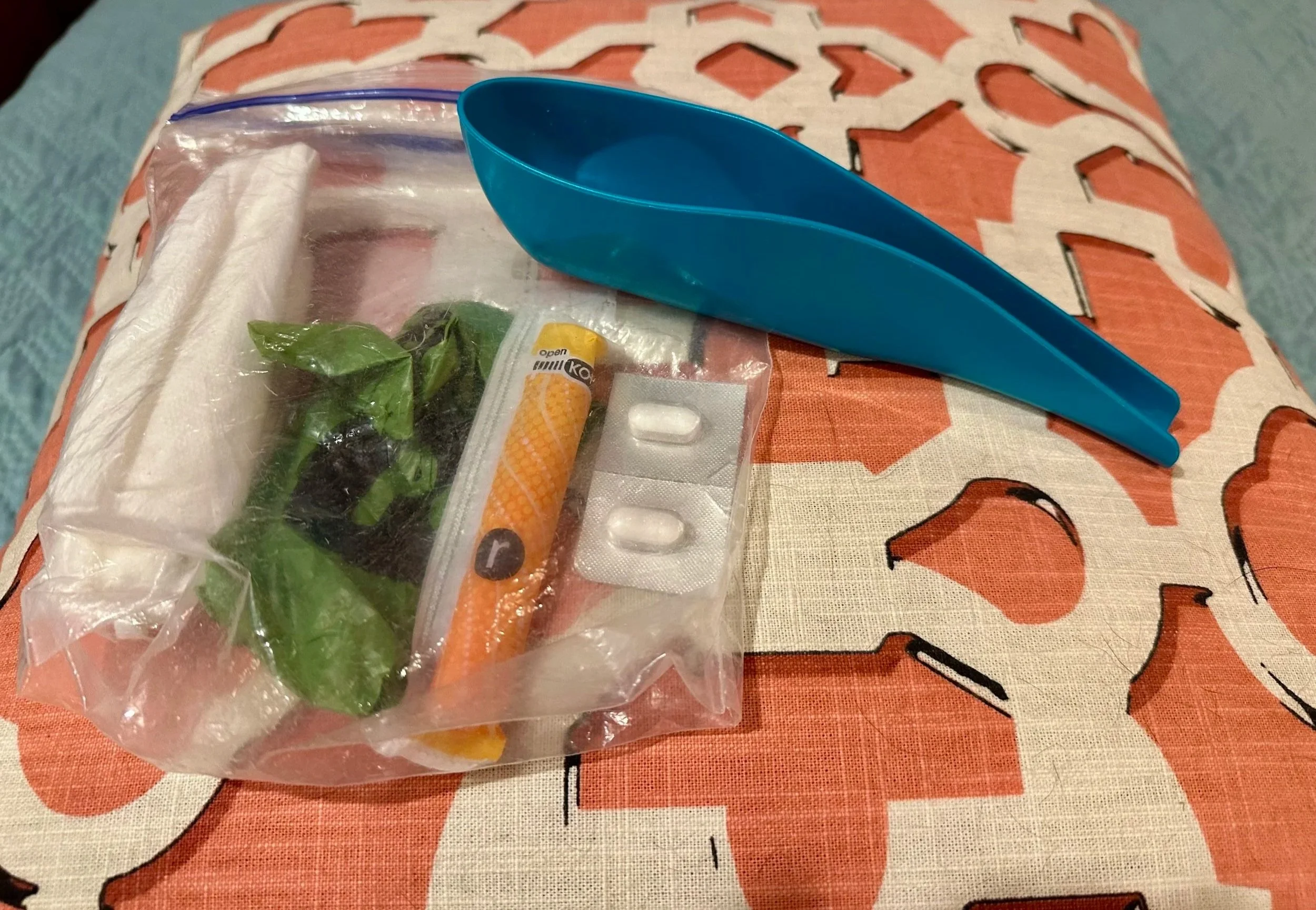
Here is my blue pStyle and the plastic baggie I carry it in. While I usually don’t need toilet paper when using the pStyle due to how you can use the edge like a squeegie, I still carry it, a tampon, and Imodium for those “just in case” times. The green dog poop bag is to put the used pStyle in if I can’t rinse it right away.
As you guessed, the pStyle is most used by women on the trail (and while climbing), but it has also proved very helpful for those with health restrictions where sitting is a challenge (due to age, pregnancy, chronic pain, surgery recovery, etc).
Why do I love it? Because before the pStyle I never could pee in the woods. Why? Because I’m a squatter who just ends up with pee running down my leg and into my shoes. And I have tried all manner of squatting to accomplish a clean pee. I’ve held trees for balance. I’ve tried to squat while quasi-sitting on a fallen tree. Nothing worked. And since I’m also very allergic to most vegetation, I also have a serious fear of getting a rash on regions where the sun don’t shine.
The pStyle is only $12 and I have at least three of them. The pStyle website is the best resource for all the questions you probably have. My number 1 tip is to practice using it in the shower before trying for the first time on the trail. That way you can practice placement of the pStyle without worrying about getting your trail clothes wet.
Are pStyles for everyone? I think so, but my friend, Jen is such a good pee squatter she sees no need for one. And my sister, who was a Marine and would go out into the field for training exercises, never even wanted to try it. She also was an accomplished pee squatter. Personally, I still think the pStyle could have made both Jen and my sister’s lives easier, but when it comes to peeing in the wilderness, I guess we have to let folks make their own decisions.
While we are talking about it, there are actually several different types of personal urination devices (e.g. Sheewee, Humangear’s Go Pee, Go Girl Lavendar, Freshette) out there. I have tried a few and I still think p Style is the easiest to use and clean.
So, there it is. The five pieces of trail running gear that I use all the time. Hopefully, you learned something new (hello, pStyle!) or came away with a brand recommendation for gear you’ve been meaning to try.
Let me know what you think and what items you would add to this list.
P.S. Stay tuned for future gear lists which will include my favorite trail running clothing recommendations and since it’s getting cold, the download on what to wear and use for winter running in the mountains.
Til next time…enjoy those trails!